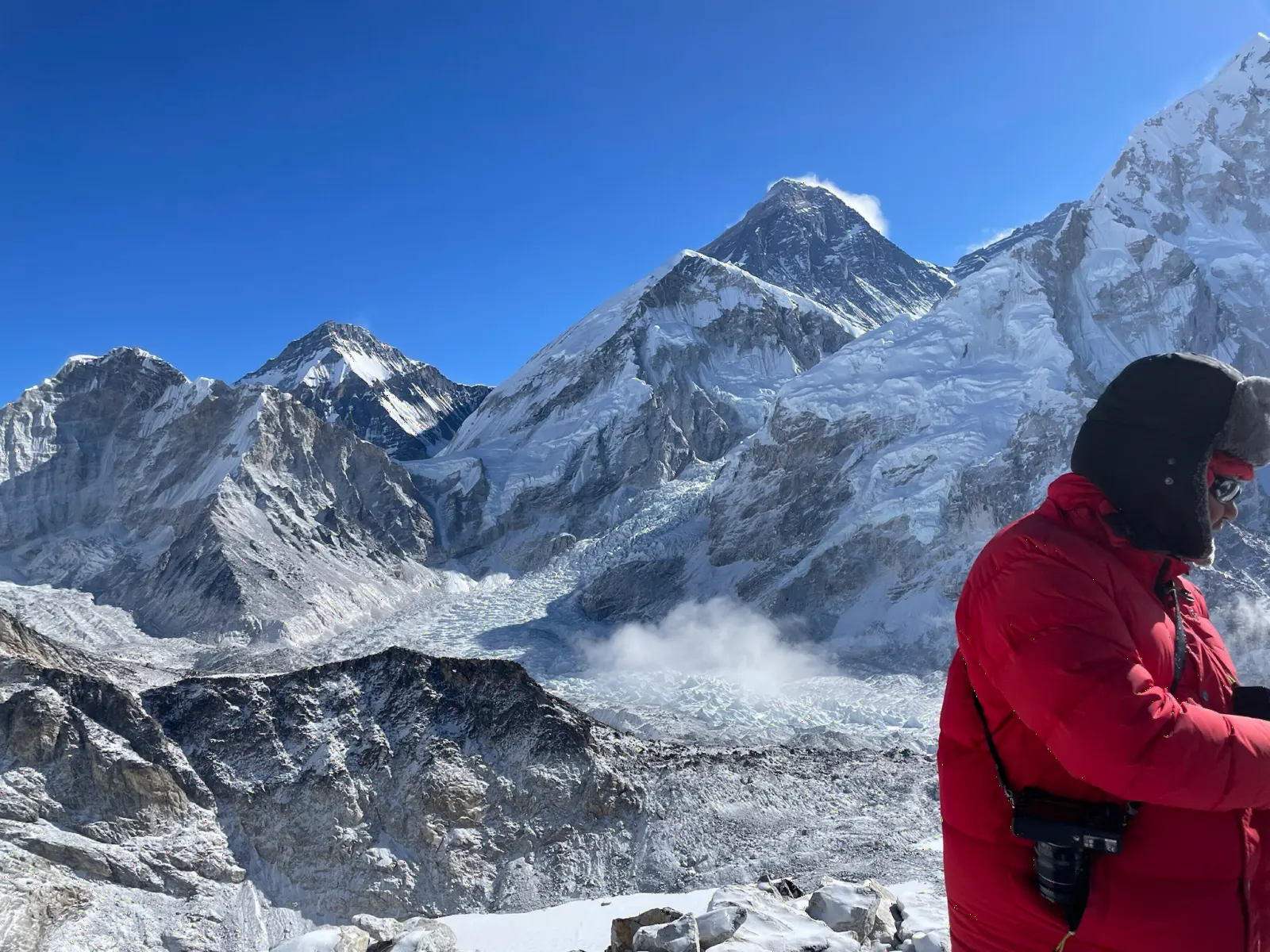
Most people who come to Nepal for the Everest region have one goal: stand at Everest Base Camp. Each season, though, more trekkers ask about the bigger loop, the Everest Three Passes Trek. It crosses three high passes, visits the Gokyo Lakes and still takes in Base Camp. Both routes start with the same flight to Lukla and the same climb to Namche Bazaar, but they are very different trips.
The routes at a glance
| Everest Base Camp | Everest Three Passes | |
|---|---|---|
| Typical length (from Kathmandu) | 14 days | 18 days |
| Highest point | Kala Patthar, 5,545 m | Kongma La, 5,535 m (Kala Patthar optional, 5,545 m) |
| High passes | None | Renjo La 5,360 m, Cho La 5,420 m, Kongma La 5,535 m |
| Gokyo Lakes and Gokyo Ri (5,357 m) | No | Yes |
| Route shape | Up and back the same valley | A loop through three valleys |
| Difficulty | Challenging but non-technical | Strenuous: steep, rocky pass days, possible snow and ice |
| Our price from (Nov 2026) | US$999 | US$1,399 |
Everest Base Camp: the classic
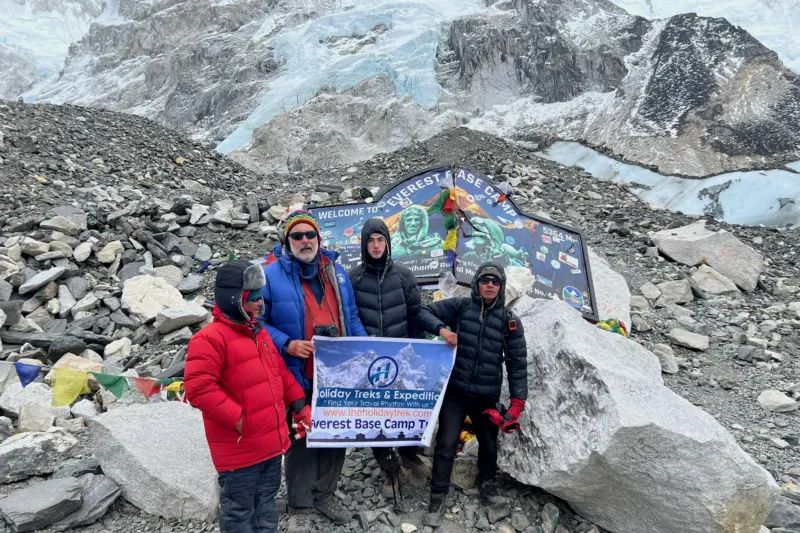
The Everest Base Camp trek follows the main trail up the Khumbu valley: Lukla, Phakding, Namche Bazaar (3,440 m), Tengboche (3,855 m), Dingboche (4,360 m), Lobuche (4,930 m) and Gorak Shep (5,164 m). From Gorak Shep you walk to Base Camp itself (5,364 m). Early the next morning you climb Kala Patthar (5,545 m), the viewpoint most trekkers remember, with Everest directly in front of you.
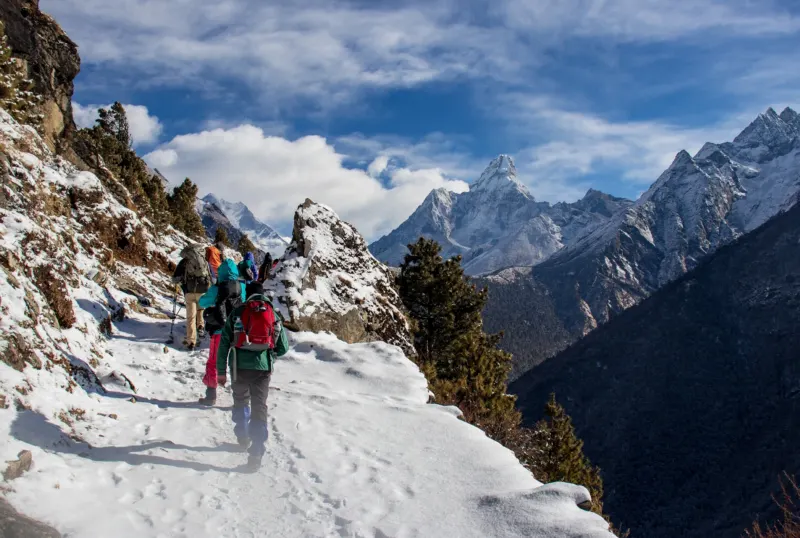
Acclimatisation days are built in at Namche and Dingboche, and the trail is busy, well marked and lined with teahouses. That is why it is the right first big trek for most people. It is hard, because altitude makes every step slower, but you do not need climbing skills. The trade-off: you walk up and back down the same valley, and in peak season (October, and April to early May) the main trail is busy.
The Three Passes: the full Khumbu
The Everest Three Passes trek links three valleys by crossing:
- Renjo La (5,360 m), between the Bhote Koshi valley and Gokyo, with one of the best views of Everest and the Gokyo Lakes in the region.
- Cho La (5,420 m), between Gokyo and the main Everest valley. Usually the trickiest crossing: a steep, rocky climb and a short glacier section that can be icy.
- Kongma La (5,535 m), the highest of the three, between Chhukung and Lobuche. A long, hard day with a steep descent at the end.
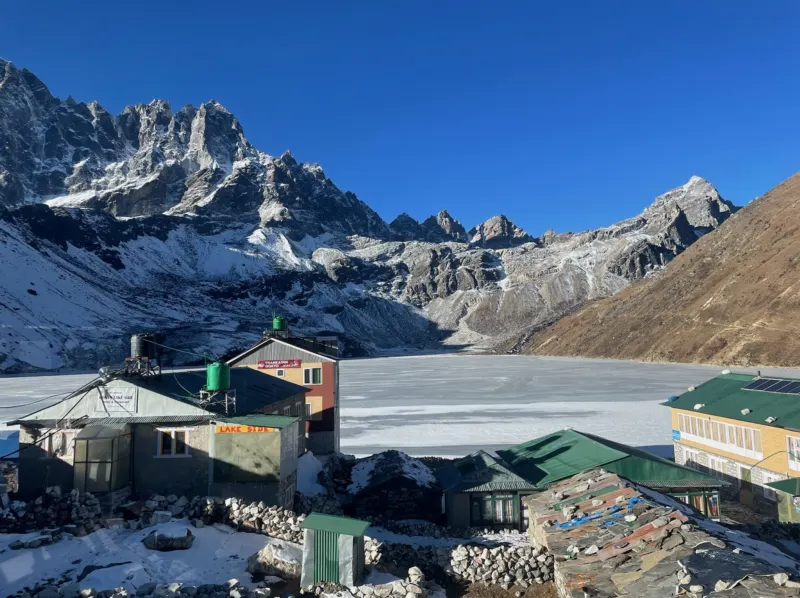
On the way you also reach Gokyo and its turquoise lakes, can climb Gokyo Ri (5,357 m), and still visit Everest Base Camp and Kala Patthar. Away from the main trail it is noticeably quieter, and you see Everest from several sides rather than one. The trade-off is effort: pass days start before dawn and are long, you spend several days above 5,000 m, and after fresh snow a pass can be closed or need extra care, so a flexible day in the plan is wise.
Fitness and experience
For Base Camp, you should be able to walk 5–7 hours a day, several days in a row, carrying a day pack. Regular hiking, stair climbing or long walks in the months before are enough for most healthy people.
For the Three Passes, aim higher. Ideally you have already done a multi-day trek above 4,000 m, so you know how your body handles altitude, and you are steady on steep, loose and rocky ground. Walking poles help a lot on the descents, and on Cho La you may need microspikes depending on conditions.
Altitude: the real challenge on both
- Go slowly above 3,000 m and use the acclimatisation days; do not skip them to save time.
- Know the warning signs: a headache that does not go away, nausea, loss of appetite, unusual breathlessness at rest, confusion or poor balance.
- Descending is the cure. If symptoms get worse, go down. A good guide will make that call even if you do not want to hear it.
- Get travel insurance that covers trekking up to at least 6,000 m and helicopter evacuation.
On the Three Passes you spend more time high, so a sensible pace matters even more.
When to go
The best months for both treks are spring (March to May) and autumn (late September to November), when skies are clearest and the passes are usually open. Winter (December to February) is possible on the Base Camp route if you do not mind serious cold, but snow can close the high passes, so Three Passes trips are best avoided then. The monsoon months (June to August) bring cloud and rain, and Lukla flights are often delayed. See the best time to trek in Nepal for month by month detail.
How many days?
Our Everest Base Camp trek is 14 days from Kathmandu back to Kathmandu, including acclimatisation days at Namche and Dingboche. Our Three Passes trek is 18 days. Some companies sell shorter versions of both. We would advise against cutting acclimatisation days, especially on the Three Passes, where you need time to adjust before the first high crossing. Whichever you choose, add a buffer day or two in Kathmandu at the end: Lukla flights are weather-dependent and delays are common.
Cost
With a licensed guide, permits, teahouse accommodation and the Lukla flights arranged, our Base Camp trek starts from US$999 per person and the Three Passes from US$1,399 (November 2026). The longer trip costs more mainly because of the extra days of guide wages, food and lodging. Prices rise for private trips for one or two people, peak-season dates and helicopter return options, and fall with a larger group. The trip pages list exactly what is included.
Teahouses
The Base Camp route has the most lodges, many with heated dining rooms, hot showers (for a fee), charging and Wi-Fi. On the Three Passes you use the same lodges in the main valley, but places such as Dzongla, Thagnak and Lungden are smaller and simpler, with fewer rooms. In peak season it helps to have a guide who can call ahead.
So, which one?
If you are asking yourself whether you can manage the Three Passes, start with Everest Base Camp. It is one of the world's great walks, and you will come home knowing how you cope with altitude. If you have already done a high trek, love quieter trails and want the views from Gokyo and the passes as well as Base Camp, the Three Passes is one of the best treks in Nepal. Still deciding between regions? Read how to choose a trek in Nepal.