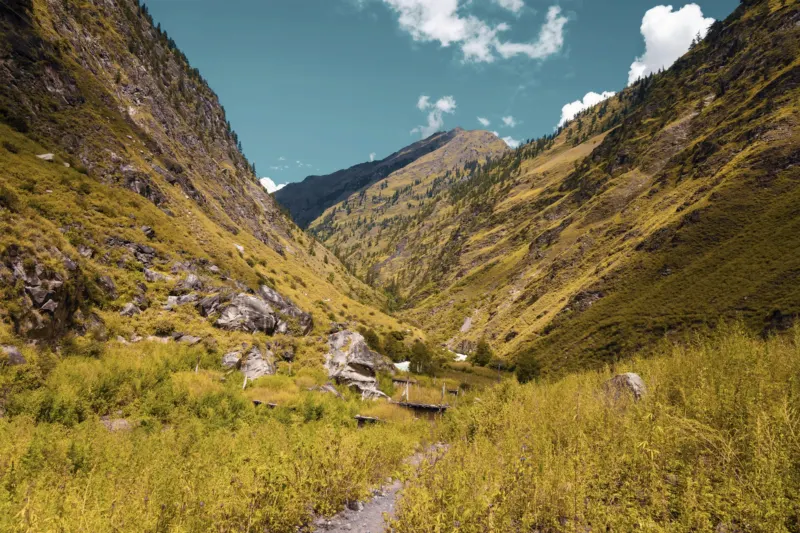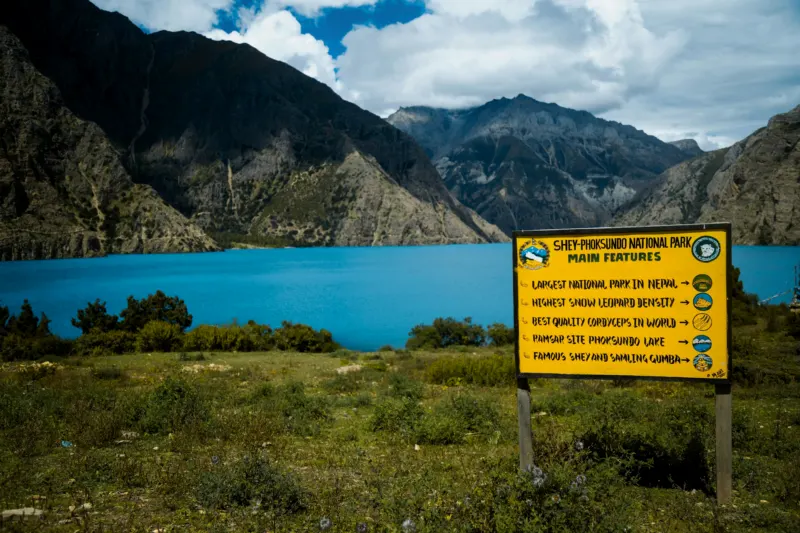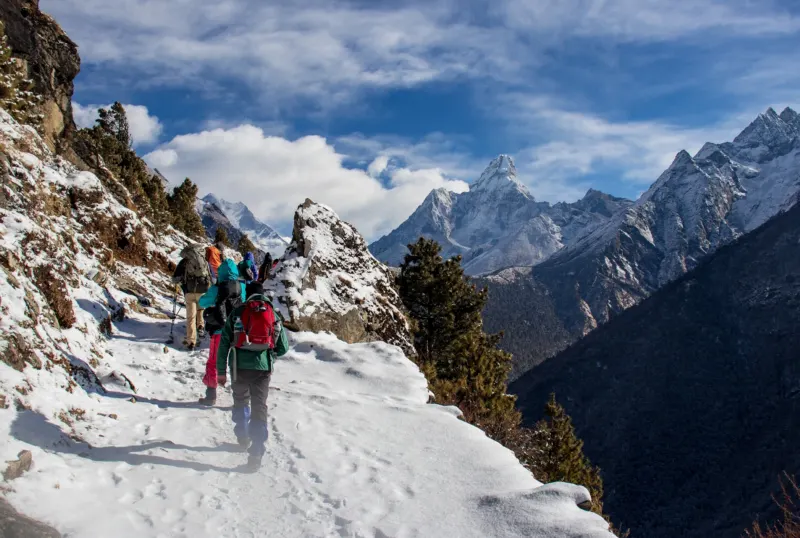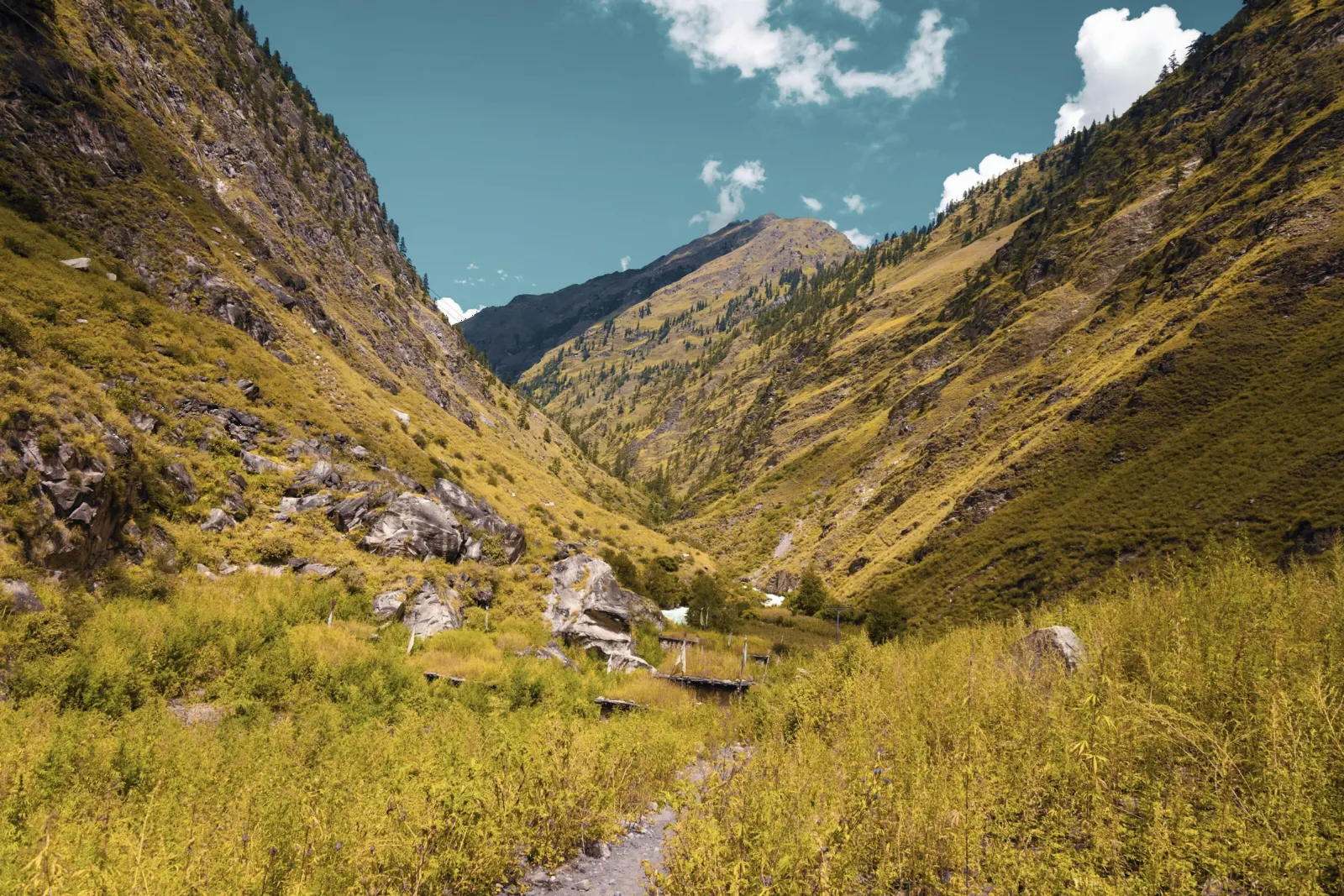
Upper Dolpo is the remote, Tibetan-Buddhist part of west Nepal, behind the Dhaulagiri range. It was closed to foreigners until 1989 and still sees only a few hundred trekkers a year. There are turquoise Phoksundo Lake, the centuries-old Shey Gompa, and villages like Saldang and Dho Tarap. There are no teahouses on most of the route, and you walk for days without seeing another group. That remoteness is the reward, and also what makes the trek hard.
How difficult is the Upper Dolpo trek?
We grade Upper Dolpo as advanced (5 of 5). It isn't technical climbing: there are no ropes or crampons in normal conditions. What makes it hard:
- Length. Our itinerary is 28 days door to door, with about three weeks of walking. Most days are 5–7 hours.
- High passes. You cross Kang La (5,360 m) between Phoksundo and Shey Gompa, then Saldang La (about 5,200 m) and the high ground beyond Yangze Gompa. Several nights are spent at 4,500–4,960 m.
- Camping. You sleep in tents and eat food prepared by the trek cook. Nights above 4,500 m are below freezing, even in summer.
- Remoteness. The nearest airstrip is Juphal, and the nearest hospital is in Nepalgunj or Kathmandu. A medical problem can mean a helicopter evacuation, so insurance that covers rescue up to 6,000 m is essential.
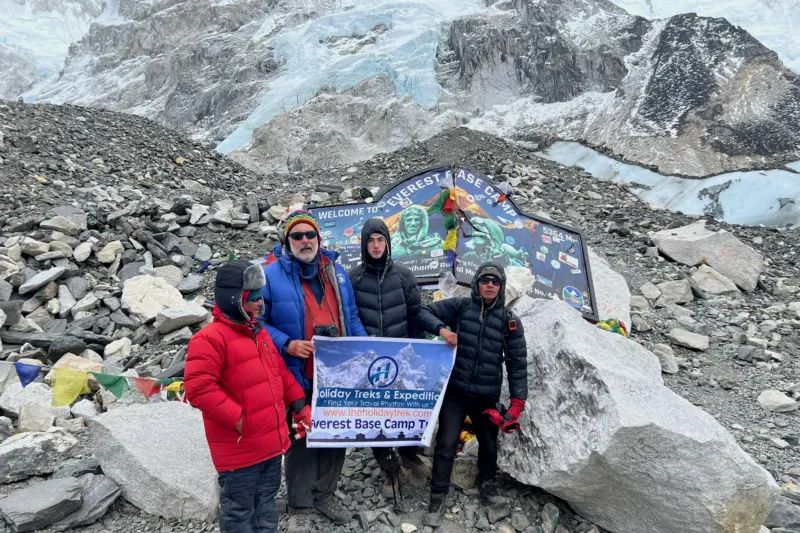
Who it suits: fit trekkers who have already done at least one high-altitude trek in Nepal, such as Everest Base Camp or the Annapurna Circuit, and who are happy camping for weeks. If this would be your first trek in Nepal, consider Lower Dolpo or a shorter route first.
Upper Dolpo or Lower Dolpo?
| Upper Dolpo | Lower Dolpo | |
|---|---|---|
| Our itinerary | 28 days | 19 days |
| Highest point | 5,360 m (Kang La) | 5,190 m |
| Grade | Advanced (5/5) | Difficult (4/5) |
| Highlights | Shey Gompa, Saldang, Yangze Gompa, Dho Tarap, Phoksundo Lake | Phoksundo Lake, Dho Tarap, Numa La and Baga La passes |
| Permit | Upper Dolpo restricted-area permit (US$500 for 10 days) | Lower Dolpo permit (much cheaper) |
| From (Nov 2026) | US$2,900 | US$1,399 |
Upper Dolpo permits and what they cost
- Upper Dolpo restricted-area permit: US$500 per person for the first 10 days, then US$50 per person for each extra day. Your days inside the restricted zone set the total, not the full trip length.
- Shey Phoksundo National Park entry and the permits for the Lower Dolpo sections of the route
- A registered agency and a licensed guide are required. Restricted-area permits are issued only through a licensed trekking agency in Kathmandu, and only to trekkers with a licensed guide. Rules on minimum group size have changed recently, so check the current rule with us when you book.
On our Upper Dolpo trek, all permits, including the Upper Dolpo special permit, are included in the price, together with the paperwork, so there are no permit fees to add on top.
Best time for the Upper Dolpo trek
Dolpo is unusual because it sits in the rain shadow north of the Dhaulagiri and Kanjiroba ranges. Most of the monsoon rain falls south of the mountains, so you can trek there when much of Nepal is wet.
- May–June: long days, the passes are open and wildflowers are coming out. A very good time.
- July–August (monsoon): mostly dry on the plateau and green in the valleys, with harvest and festival season in the villages. The weak point is flights between Nepalgunj and Juphal, which are often delayed by cloud, so build in spare days.
- September–October: clear skies, crisp air and stable weather, the classic window. Nights get colder from mid-October.
- November–April: not recommended. Snow can close the high passes, and many villagers move to lower ground for winter.
How to prepare
- Train for 2–3 months. Do long hill walks of 5–7 hours with a day pack, on back-to-back days, plus stair or incline work.
- Get your altitude experience first. Know how your body reacts above 4,000 m before you attempt three weeks in the high country.
- Gear: a sleeping bag rated to about −15 °C, a down jacket, well broken-in boots, trekking poles and a water purification method. Our team provides the tents, dining and kitchen tents and all camp equipment.
- Insurance: it must cover trekking up to 6,000 m and helicopter evacuation.
- Spare days: keep at least two buffer days for Juphal flight delays.
What our Upper Dolpo trek includes
Flights Kathmandu – Nepalgunj – Juphal and back, a Kathmandu city tour, hotels in Kathmandu and Nepalgunj, full-board camping meals cooked by our trek cook, twin-share tents and all camping equipment, an experienced guide and porters (insured, with their food and wages covered), boiled drinking water, a first-aid kit, and all permits including the Upper Dolpo special permit. International flights, your Nepal visa, travel insurance and tips are not included. See the full Upper Dolpo itinerary and dates, or ask us to plan a custom Dolpo trip.