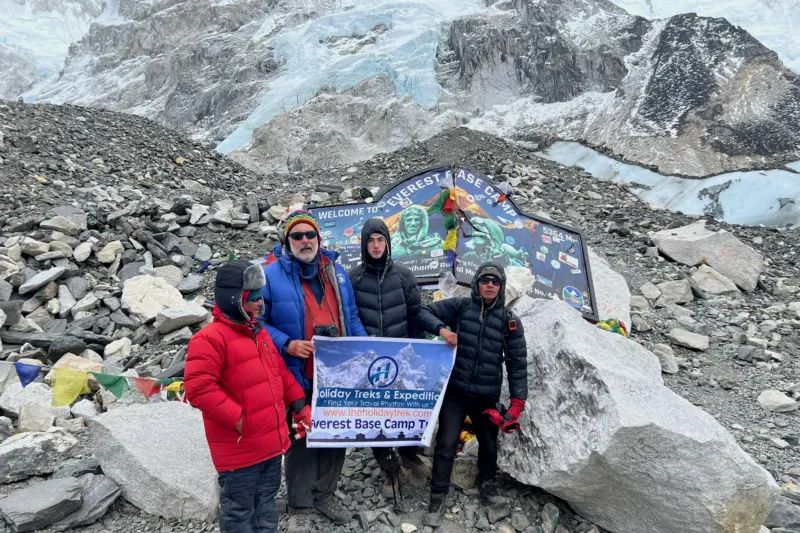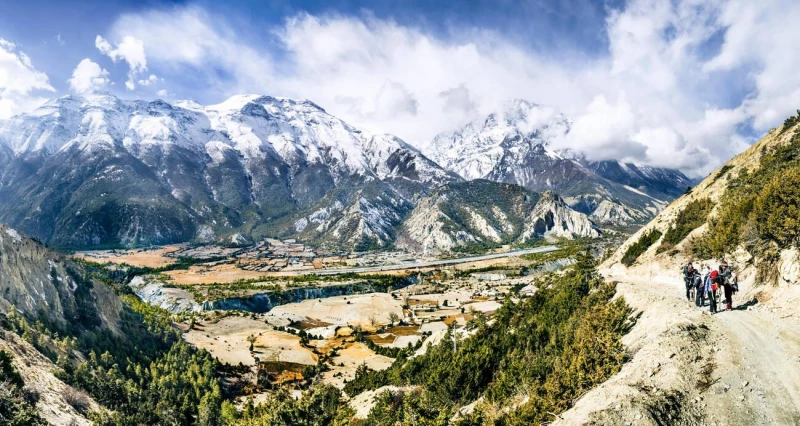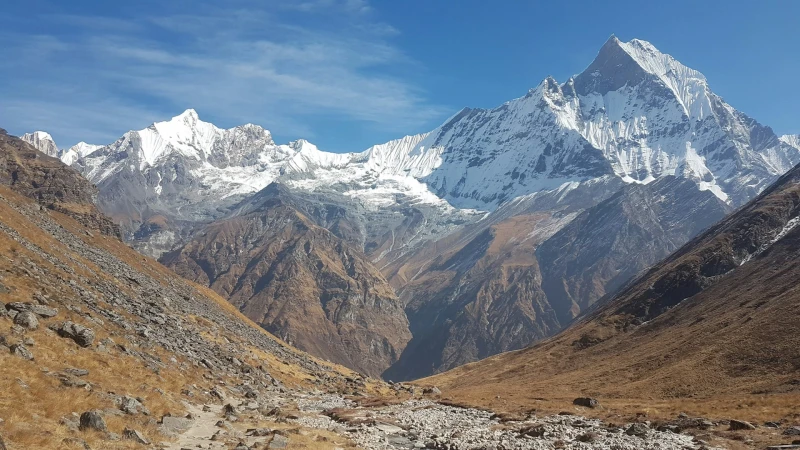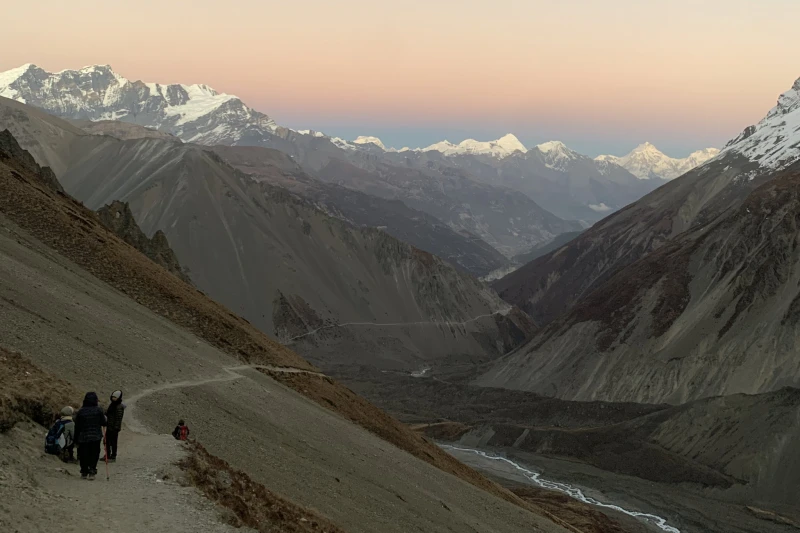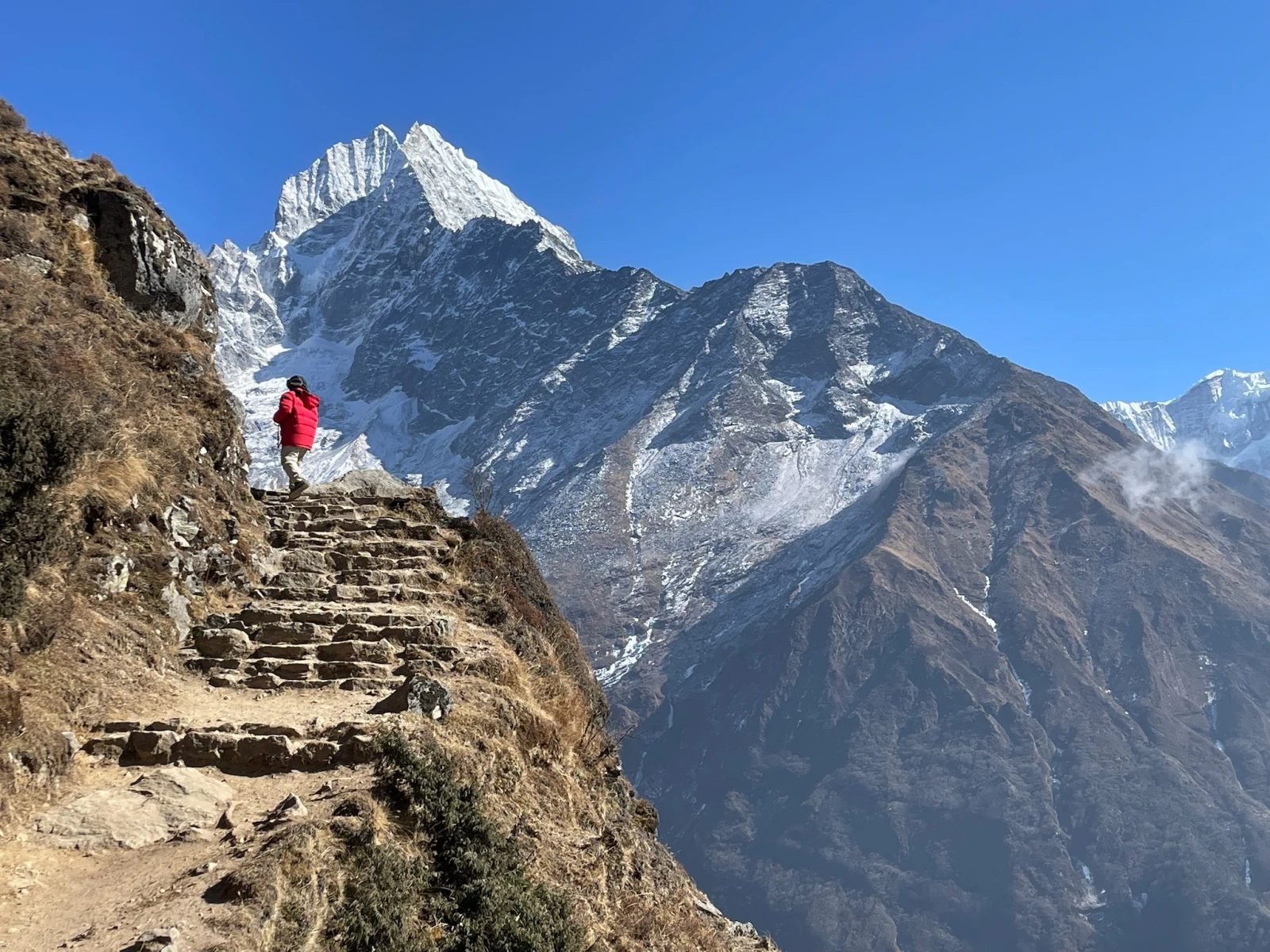
"Can I actually do this?" is the question we hear most from people looking at the Everest Base Camp trek. The honest answer: most reasonably fit people can, as long as they respect the altitude and prepare their legs. This guide explains what makes the trek hard, which days are toughest on our 14-day itinerary, and a simple 8-week plan to get ready.
Everest Base Camp difficulty at a glance
| Our grade | Difficult, because of the altitude |
| Technical skills | None needed: no ropes, no climbing |
| Days on the trail | 12 nights from Lukla back to Lukla (14 days from Kathmandu) |
| Highest night | Gorak Shep, 5,164 m |
| Highest point | Kala Patthar, 5,545 m (Base Camp itself is 5,364 m) |
| Walking per day | Usually 4–7 hours at a slow, steady pace |
| What you carry | A daypack. On our trek one porter carries for two trekkers, up to 10 kg each |
What makes it hard
1. Altitude
Above about 3,000 m there is noticeably less oxygen in each breath, and above 5,000 m it is roughly half of what you breathe at sea level. You walk slower, you get out of breath on small climbs, and sleep can be poor. That is why our itinerary has two acclimatisation days, in Namche Bazaar (3,440 m) and Dingboche (4,360 m). Altitude sickness can affect anyone, however fit, so read our guide to altitude sickness on Everest and Annapurna treks before you go.
2. Many days in a row
No single day is extreme, but there are about twelve of them back to back, often with poor sleep. Tired legs and a cold or cough from the dry air add up. Training for stamina matters more than training for speed.
3. Up and down
The trail climbs overall, but it is not a steady ramp. You drop to rivers and climb back up, and there are long stone staircases, most famously the climb to Namche Bazaar. The descent days are long too: Namche to Lukla on the last trekking day takes about five hours.
4. Cold
Above Dingboche, nights are below freezing for most of the year, and lodge rooms are unheated. Good sleeping gear and warm layers make the difference between resting and lying awake.
The toughest days on our 14-day itinerary
- Day 3, Phakding to Namche Bazaar (2,650 m to 3,440 m): the first big climb, about 800 m up, much of it on the steep hill below Namche.
- Day 8, Dingboche to Lobuche (4,360 m to 4,930 m): you climb past the memorials at Thukla, and the altitude is now clearly felt.
- Day 9, Lobuche to Everest Base Camp and back to Gorak Shep: rocky moraine walking at over 5,000 m, then the highest night of the trek.
- Day 10, Kala Patthar sunrise, then down to Pheriche (4,250 m): a very early, cold start to 5,545 m, then a long descent. Hard, but most people call it the best day of the trip.
Who can do the Everest Base Camp trek?
You do not need to be an athlete. You should be able to walk 5–6 hours with hills, carrying a light daypack, and do it again the next day. If you have a heart or lung condition, high blood pressure or any other medical concern, talk to your doctor before booking. If you have never trekked before, a shorter trek first, or our 17-day EBC trek with extra acclimatisation, can make the experience more enjoyable.
An 8-week training plan
This is a general plan for healthy adults. Adjust it to your starting fitness, and build up gradually.
| Weeks | During the week | Weekend |
|---|---|---|
| 1–2 | 3 sessions of 30–40 minutes brisk walking, cycling or swimming; 2 short leg-strength sessions (squats, lunges, step-ups) | One 2–3 hour hike with hills |
| 3–4 | 3–4 cardio sessions of 45 minutes, including stairs or incline walking; 2 strength sessions | One 3–4 hour hike with a 5–6 kg daypack |
| 5–6 | 4 cardio sessions of 45–60 minutes; 2 strength sessions, add step-downs for the descents | Hikes on both days, 4–6 hours, with the boots you will trek in |
| 7 | Keep up 3–4 sessions | Your longest back-to-back weekend: 5–6 hours each day |
| 8 | Easy sessions only, rest your legs | A short, easy walk. Arrive in Nepal fresh, not tired |
Two tips from the trail: break in your boots well before you fly, and practise walking slowly uphill without stopping. On the trek, a slow steady pace is far more efficient than fast bursts and long rests.
How we make it easier
- Two acclimatisation days built into the itinerary, at Namche Bazaar and Dingboche.
- A government-licensed guide who checks how everyone is doing every day.
- Porters carry your main bag, so you walk with a daypack only.
- Lodges booked along the way, so you rest instead of searching for a room.
When you are ready, see our 14-day Everest Base Camp Trek, our EBC packing list, or compare every Everest option on our Everest region page.