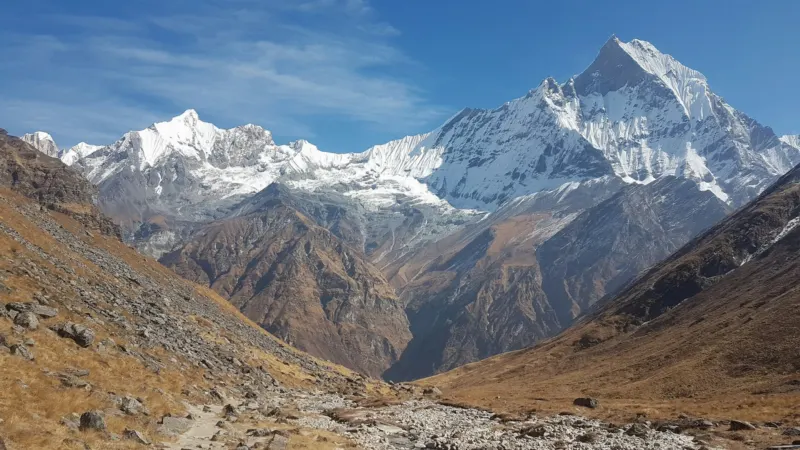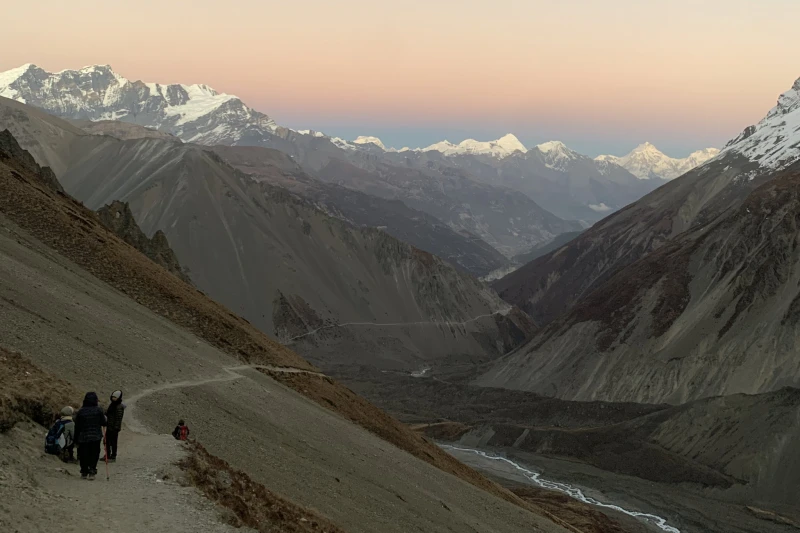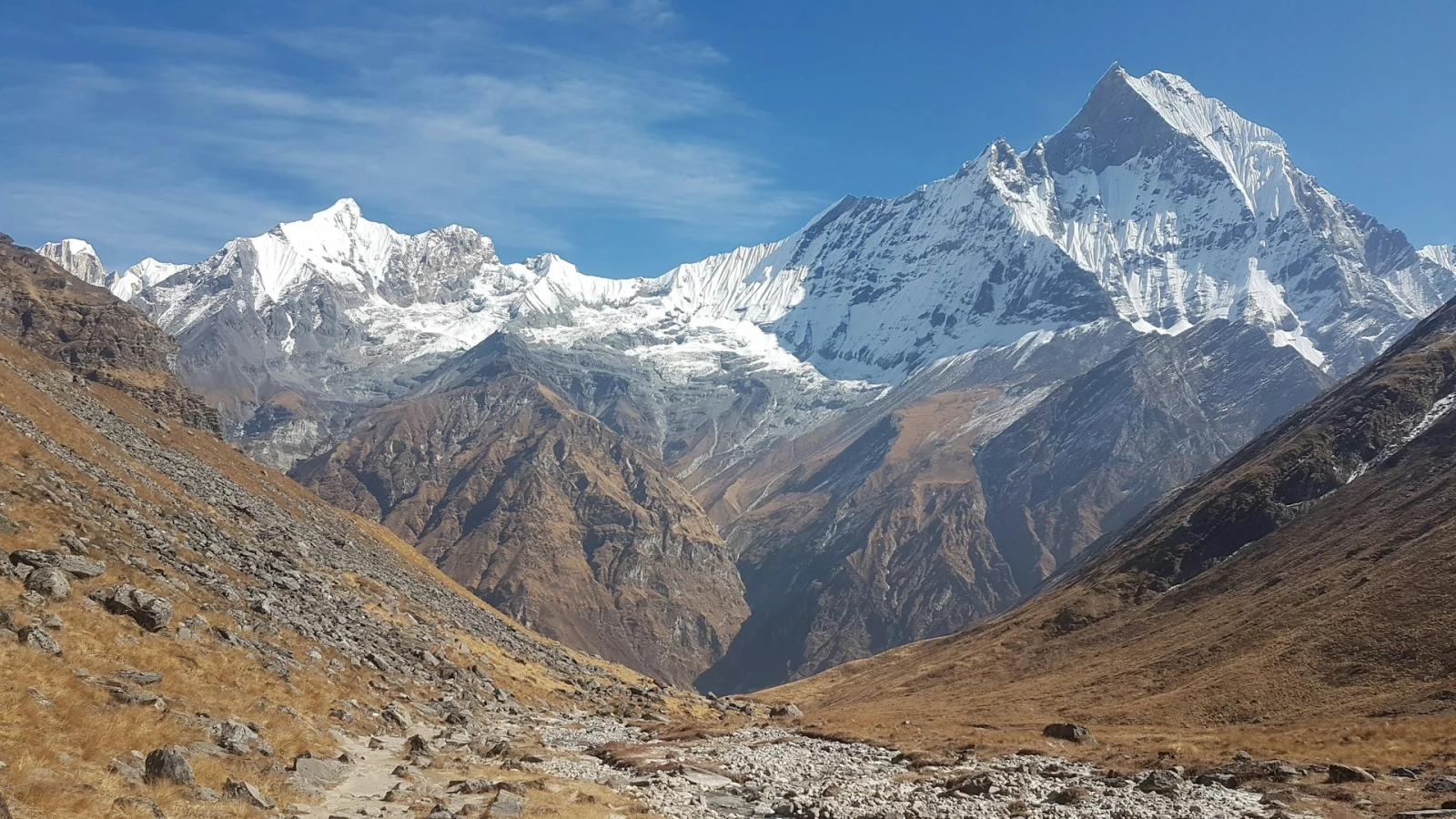
Annapurna Base Camp (ABC) is often recommended as the best first big trek in Nepal, and for good reason: the altitude is reasonable and the scenery is spectacular from start to finish. But "moderate" doesn't mean easy. Here is what to expect on our 15-day itinerary, day by day where it matters.
ABC difficulty at a glance
| Our grade | Moderate |
| Technical skills | None needed |
| Nights in teahouses | 9 (15 days from Kathmandu) |
| Highest point and night | Annapurna Base Camp, 4,130 m |
| Nights above 4,000 m | One |
| Main challenge | Stone steps up and down, and a long descent |
What makes it hard
Stairs, lots of them
The Annapurna trails are paved with stone steps. Between villages you often climb hundreds of metres on steps, drop to a river and climb again. This works your legs and knees much more than a steady slope.
The descent
Coming down from Base Camp is fast: on our itinerary you descend from 4,130 m to Sinuwa (2,360 m) in a single day, almost 1,800 m down. Tired legs and knees feel it. Trekking poles help a lot.
Altitude, a little
ABC is much lower than Everest Base Camp, but 4,130 m is still high enough for altitude sickness. Walk slowly above Deurali (3,230 m) and read our altitude sickness guide.
Weather and snow
Between Deurali and Machhapuchhre Base Camp the trail crosses avalanche-prone slopes after heavy snow, usually in late winter and spring. Your guide checks conditions locally before going up.
The toughest days on our itinerary
- Day 4, Birethanti (1,263 m) to Ulleri (1,960 m): the famous Ulleri staircase, about 700 m of climbing, much of it on steps.
- Day 6, Poon Hill (3,210 m) at sunrise, then on to Tadapani (2,630 m): a very early start, a steep climb in the dark, then a long day through the forest.
- Day 10, Deurali (3,230 m) to Annapurna Base Camp (4,130 m) via Machhapuchhre Base Camp (3,700 m): the highest climb of the trek, at altitude, and the most rewarding.
- Day 11, Annapurna Base Camp down to Sinuwa (2,360 m): the long descent.
Who can do the ABC trek?
Most healthy people with reasonable fitness can. It is a good choice for a first trek in the Himalaya, and for anyone who wants big mountains without very high altitude. If you have knee problems, bring poles and train on downhill walking. If you have a medical condition, talk to your doctor first.
How to train for ABC
Use the general plan in our Everest Base Camp training guide, with three changes for Annapurna:
- Stairs, every week. Climb stairs or a steep hill for 30–60 minutes, building up to carrying a light daypack.
- Train the descent. Walk downstairs and downhill slowly and with control. Step-downs and lunges strengthen the muscles that protect your knees.
- Back-to-back hiking days. Two hilly days in a row, 4–6 hours each, a few weeks before you fly.
Want it easier or harder?
- Easier: the Ghorepani Poon Hill Trek stays lower and shorter, or skip the walking with the 7-day ABC helicopter tour.
- Harder: the 19-day ABC with Mardi Himal adds Mardi Himal Base Camp (4,500 m), or take on the Annapurna Circuit and its 5,416 m pass. Compare them in Annapurna Circuit vs ABC.
Ready to go? See our 15-day Annapurna Base Camp Trek.