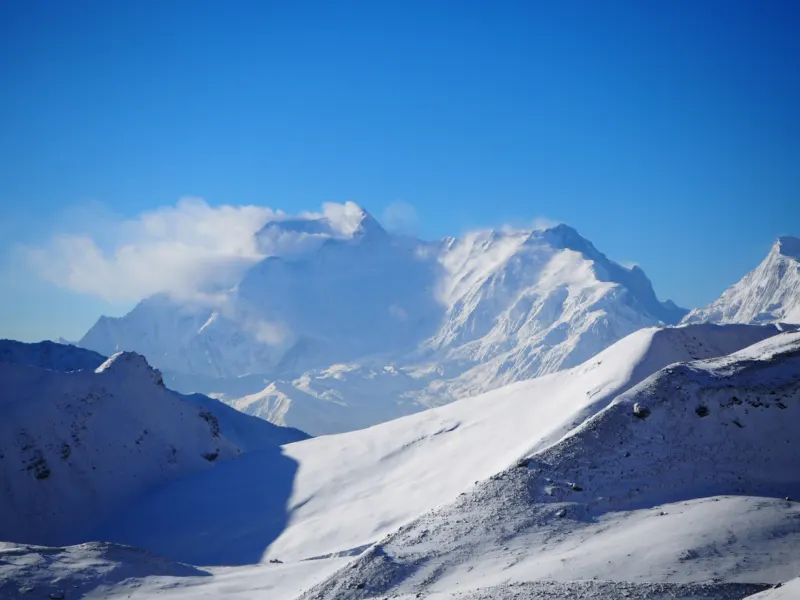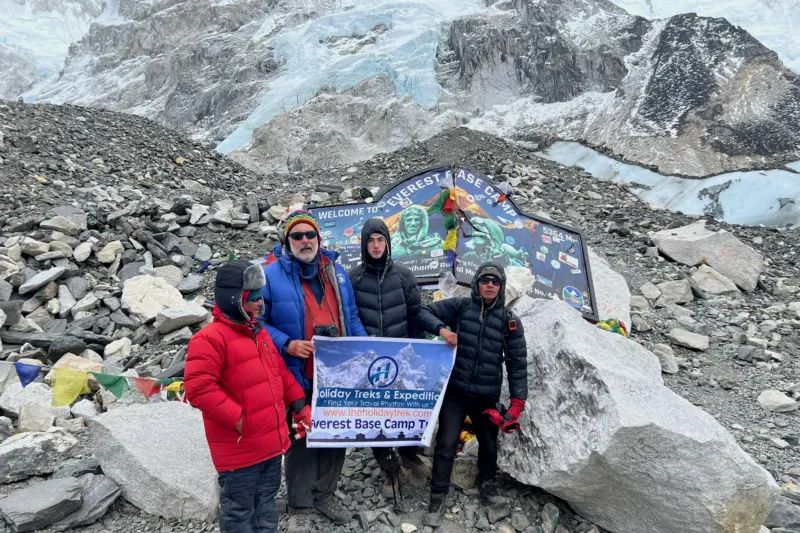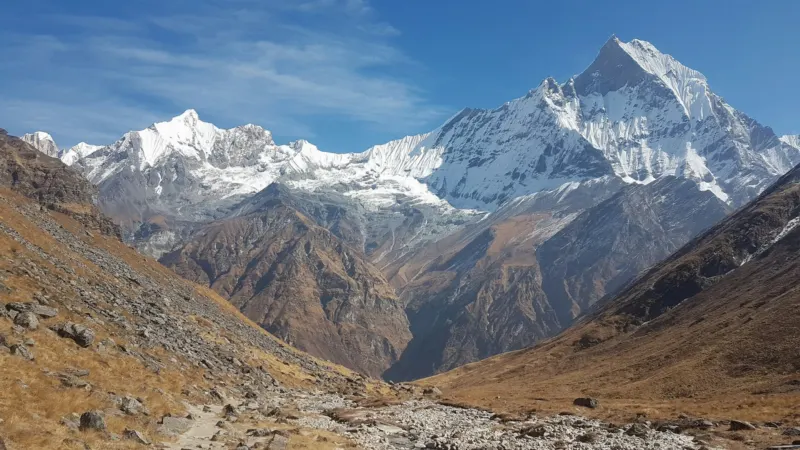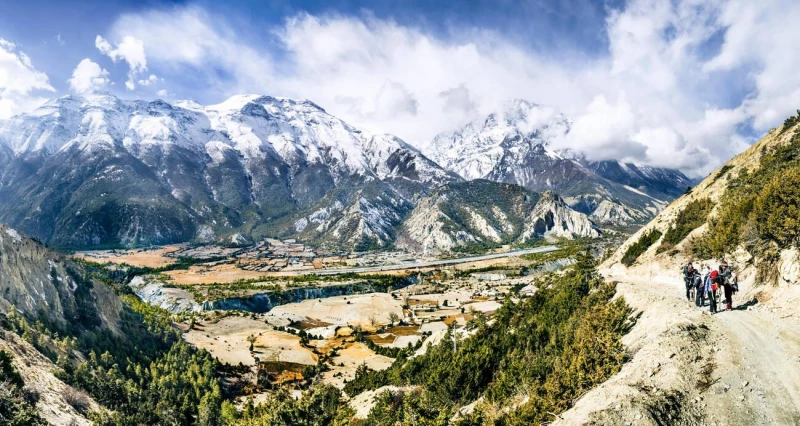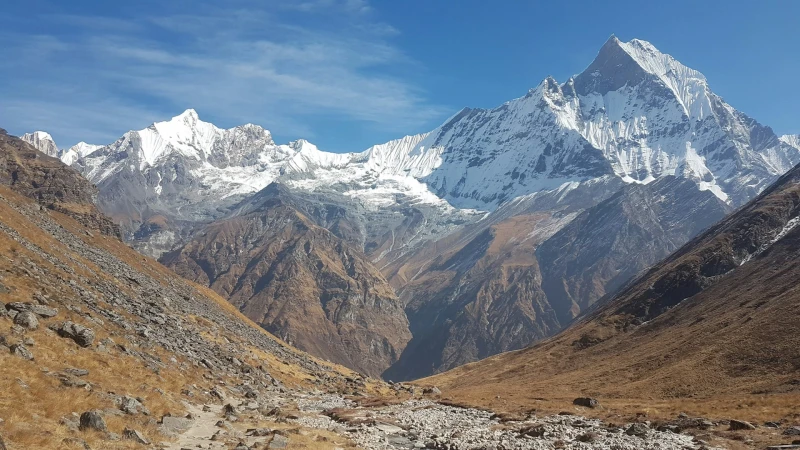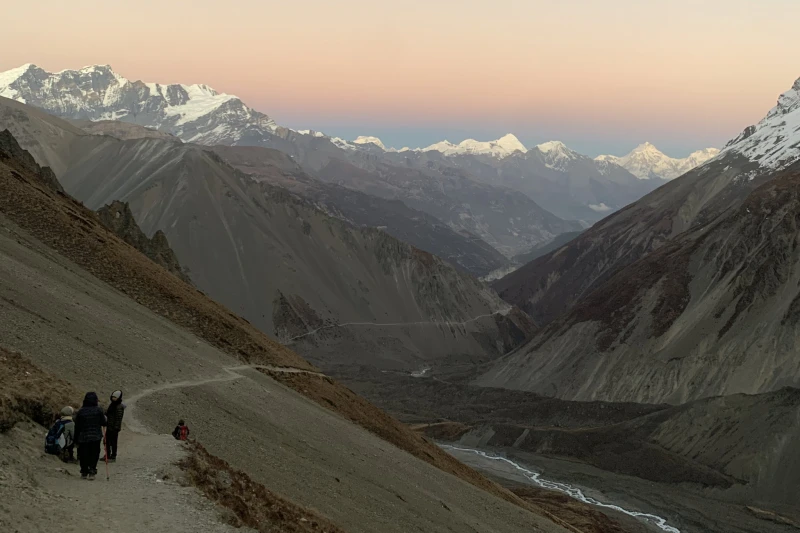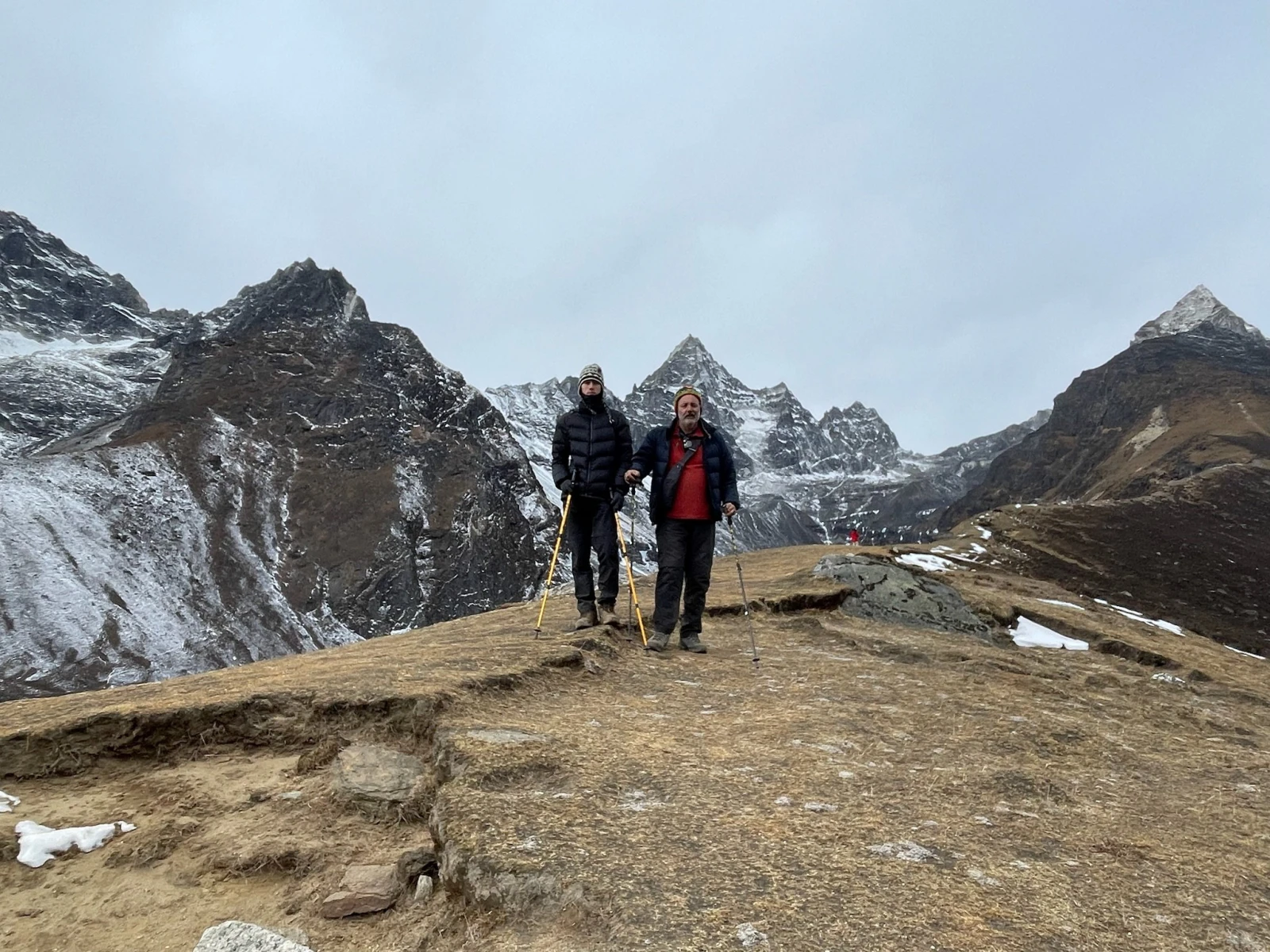
Every year, thousands of trekkers reach Everest Base Camp, Thorong La and Annapurna Base Camp without serious problems. What they have in common is not fitness, but time: their bodies were given enough days to adjust. This guide explains what altitude sickness is, how to recognise it early, how to lower your risk, and what a good guide does when someone is unwell. It is general information, not medical advice: talk to your doctor before a high-altitude trek, especially if you have any health condition.
What altitude sickness is
As you climb, the air holds less oxygen. Your body adapts over days by breathing faster and making changes in the blood. If you climb faster than it can adapt, you can get acute mountain sickness (AMS). In rare cases this develops into two dangerous conditions:
- HAPE (high-altitude pulmonary oedema): fluid in the lungs. Signs: breathlessness even at rest, a wet cough, unusual tiredness.
- HACE (high-altitude cerebral oedema): swelling of the brain. Signs: confusion, unusual behaviour, stumbling or being unable to walk in a straight line, extreme drowsiness.
Both are emergencies. They need immediate descent and medical help.
Signs to watch for
| Mild (common) | Serious: go down |
|---|---|
| Headache that eases with rest and water | Headache that keeps getting worse |
| Poor appetite, mild nausea | Vomiting that won't stop |
| Tiredness, poor sleep | Breathlessness at rest, a wet cough |
| Mild dizziness | Confusion, stumbling, unable to walk in a straight line |
The golden rules: don't go higher with symptoms, and go down if they get worse. Never leave someone with symptoms alone.
How to lower your risk
- Climb slowly. Above 3,000 m, the usual guidance is to raise your sleeping altitude by no more than about 300–500 m per night, with a rest day every three to four days.
- Walk slowly. Steady and slow uphill, even if you feel fine.
- Drink enough. The air is very dry. See our post on drinking water on the trek.
- Eat, even without appetite. Carbohydrates help.
- Avoid alcohol and sleeping pills on the way up.
- Ask your doctor about acetazolamide (Diamox). It is a prescription medicine that can help prevent AMS for some people. It doesn't replace a slow ascent and it isn't right for everyone.
- Tell your guide early. Hiding a headache to keep up with the group is the most common mistake.
How our itineraries are built for acclimatisation
| Trek | Highest night | Highest point | Acclimatisation |
|---|---|---|---|
| Everest Base Camp, 14 days | Gorak Shep 5,164 m | Kala Patthar 5,545 m | Rest days at Namche Bazaar (3,440 m) and Dingboche (4,360 m) |
| Annapurna Circuit, 14 days | Thorung Phedi 4,525 m or High Camp 4,925 m | Thorong La 5,416 m | Rest day in Manang (3,540 m), then Ledar (4,200 m) before the pass |
| Annapurna Base Camp, 15 days | Annapurna Base Camp 4,130 m | Annapurna Base Camp 4,130 m | Gradual climb over seven walking days, only one night above 4,000 m |
If you want more time, choose a longer version: our 17-day EBC trek adds extra acclimatisation, and the Annapurna Circuit with Tilicho Lake spends extra days high up before Thorong La. For the pass itself, read crossing Thorong La.
What our guides do
- Check how everyone slept, ate and feels every day.
- Set a slow pace, especially on the days above 4,000 m.
- Decide when someone must stop or go down. Our trek leaders have the authority to stop someone continuing, and that decision isn't up for negotiation.
- Arrange evacuation when needed. Helicopter rescue is paid by your travel insurance, so check that your policy covers trekking up to the altitude of your trek, including helicopter evacuation.
Common questions
Does being fit protect me?
No. Fitness makes the walking easier, but it doesn't stop altitude sickness. Fit people sometimes get into trouble because they walk too fast.
Is a pulse oximeter useful?
It can show a trend, but numbers vary a lot at altitude and cold fingers give low readings. How you feel and the signs above matter more.
If I go down, is my trek over?
Not always. Mild AMS often improves after a night or two lower down, and some trekkers then continue slowly. Serious symptoms mean the trek is over, and that is the right call.